
Institutional Recognition and Its Consequences
STAKESInstitutional Recognition
The Prix Marcel Duchamp did not merely confer a title. It brought together financial support, collector validation, FIAC visibility, museum exhibition, publication, press attention, and international cultural authority. The award helped establish not only that Claude Closky was important, but that his work represented artistic innovation.
The Recognition Gap
Williams had already spent more than a decade developing the works placed under examination. The issue is therefore not a momentary resemblance but a transfer of historical consequence: one artist's sustained production remained without comparable institutional recognition while another artist's later work entered one of the most influential systems of artistic validation in France.
Recognition and Historical Memory
Institutional recognition does not determine who made the work first, but it can determine whose work history remembers first. Once a later body of work enters the powerful circuits of prizes, museums, collectors, publications, and international press, the chronology of visibility can displace the chronology of creation. Recognition is then mistaken for originality, and the artist who established the earlier record can disappear from the history subsequently written around it.
This project reconstructs a disputed chronology rather than treating the comparison set as a single, uniform proof. Williams produced, documented, and circulated the works represented on the left before the corresponding Closky works shown beside them. Some comparisons bear directly upon artistic precedence before the 2005 award; others document the continued appearance of related forms in Closky's practice after the prize. Together, they show how institutional recognition can cause the chronology of visibility to overshadow the chronology of creation, while leaving the precise historical relationship between the two practices open to examination.
Le Prix Marcel Duchamp 2005 devrait-il être réattribué à LG Williams?
Should the 2005 Prix Marcel Duchamp be reattributed to LG Williams?
Le Huffington Post France, September 1, 2012Opening contact sheet from the original comparison presentation. Twenty-three individual comparison panels recovered and reproduced in §05. Archival PDF preserved by LG Williams / The Estate of LG Williams.
Historical Consequence
The historical injury identified by Williams's project is not simply that he did not receive a prize. It is that institutional recognition helped establish a chronology in which his earlier accomplishments remained largely absent, while related forms entered public art history through a more visible artist.
lgartworld, GeoCities, and the Public Record
BEFORE 2005Long before the 2012 Huffington Post comparison, LG Williams had already used the internet to publish and organize his work. The GeoCities site lgartworld functioned as an artist website, portfolio, exhibition space, press room, contact directory, and developing archive. A Wayback Machine capture dated January 15, 2005 places the site online before Claude Closky received the fifth Prix Marcel Duchamp.
The importance of this evidence is not nostalgic. The controversy depends upon chronology. The surviving archive demonstrates that Williams's artistic identity and body of work were already being publicly documented before the later accusation. Arquivo.pt, the Internet Archive, and the surviving GeoCities mirror now preserve different parts of that early record.
Williams's work was not undocumented. It was unrecognized.
The archive existed before the accusation.
- Open the January 15, 2005 lgartworld capture↗︎
- Search preserved lgartworld images at Arquivo.pt↗︎
- Open the surviving lgartworld mirror↗︎
- View the historical site structure↗︎
- View selected 1999 installation records↗︎
- Open the 2002 press-release PDFPDF ↗︎
The surviving early-web record establishes the terrain. The comparison slideshow then asks what happened when related forms entered a far more powerful system of recognition.

An Unresolved Historical Problem
2005–2012The Prix Marcel Duchamp 2005 project documents a 2012 dispute over artistic precedent, authorship, institutional recognition, and the authority of archives. Through a Huffington Post article, a twenty-five-part visual comparison, and a dedicated website, LG Williams and Julia Friedman argued that works attributed to 2005 laureate Claude Closky repeated formal and conceptual structures present in Williams's earlier practice. The intervention subsequently generated an opposing account: that Williams had constructed the very archive being offered as evidence. The resulting affair turned authorship itself into the subject of the work.
Claude Closky received the 2005 Prix Marcel Duchamp; his associated Centre Pompidou exhibition "Manège" took place in 2006. Julia Friedman published the Huffington Post comparison in 2012, embedding the original slideshow, from which twenty-three comparison panels have been recovered. LG Williams preserved and expanded the argument through a dedicated website; Telephonebooth Gallery endorsed the accusation; Jean-Noël Lafargue published a detailed counter-interpretation. The event concerns both an allegation of artistic appropriation and a dispute over whether the evidentiary archive itself was constructed. As the dispute developed, the archive ceased to function only as evidence and became part of the artwork itself: a structure capable of establishing, contesting, and even producing the historical identity it appeared merely to document.

The Institutional Apparatus
2000–2006The Prix Marcel Duchamp was created in 2000 by ADIAF (Association pour la diffusion internationale de l'art français), in partnership with the Centre Pompidou since the prize's creation, and with FIAC from 2005. Nominees are selected by ADIAF members — described by the Centre Pompidou as collectors and art enthusiasts — and the winner by an international jury of museum professionals, critics, and collectors.
Claude Closky was the 2005 laureate. His associated exhibition, "Manège," was presented at Espace 315, Centre Pompidou, Paris, from May 17 through July 31, 2006, curated by Jean-Pierre Bordaz.
The prize and the exhibition are distinct dates: the 2005 award should never be collapsed into the 2006 exhibition, and not every work used in the 2012 comparison necessarily concerns "Manège."
Claude Closky: Chronological Context
- Closky's practice was established before the 2005 prize.
- The comparison includes Closky works dated 1999, 2002, 2003, and 2005.
- Closky received the Prix Marcel Duchamp in 2005.
- Manège was exhibited at the Centre Pompidou in 2006.
- The comparison also includes later Closky works dated through 2011.

The Comparison Slideshow
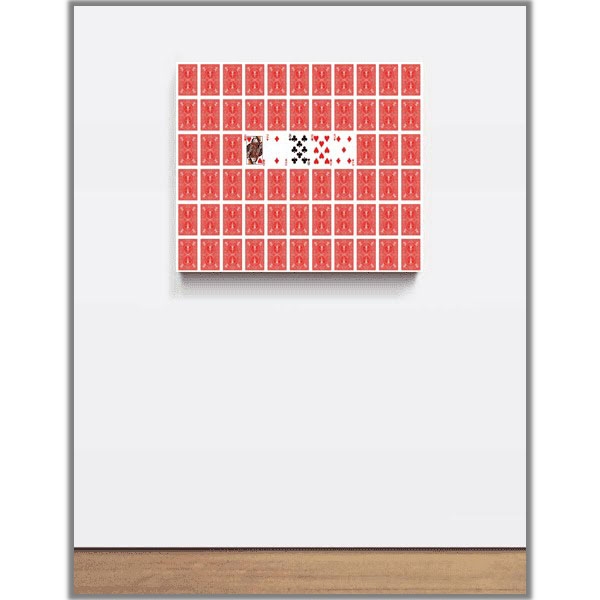
CORE EVIDENCEWilliams's and Friedman's argument was built as a sequence of paired images: LG Williams's work at left, Claude Closky's at right, followed by an editorial note on the nature of the resemblance. Each pair carries its own degree of confidence — the page does not assign the same certainty to all of them. The panels below reproduce the recovered slideshow images as composed for original publication.
The recovered comparison set is chronologically mixed and therefore performs more than one historical function. Comparisons involving Closky works dated before or during 2005 bear most directly upon the project's question of artistic precedence at the time of the award. Comparisons involving Closky works produced after 2005 cannot establish what the jury recognized that year; instead, they document the continued development of related visual and conceptual structures after institutional recognition had been conferred. The slideshow should therefore be read neither as twenty-three identical proofs nor as evidence of a single act of derivation, but as an archive of differently dated formal relationships whose historical significance must be evaluated pair by pair.
Numerical systems, lists, linguistic permutations, dates, quantities, repetitions, and serial structures were already established within postwar and Conceptual art. The project does not depend upon the proposition that either Williams or Closky invented these general languages. Its narrower argument concerns the particular configurations assembled within Williams's practice, their documented dates, their relationship to the works paired with them, and the unequal institutional visibility subsequently attached to the two bodies of work.
How to Read the Chronology
Pre-2005 Closky works: directly relevant to the precedence question.
2005 Closky works: contemporaneous with the award.
Post-2005 Closky works: evidence of continuing formal convergence, not evidence of what the 2005 jury considered.


Twenty-three paired comparisons recovered from the slideshow. In every pair, LG Williams appears at left and Claude Closky at right.
LG Williams Works Represented in the Comparison
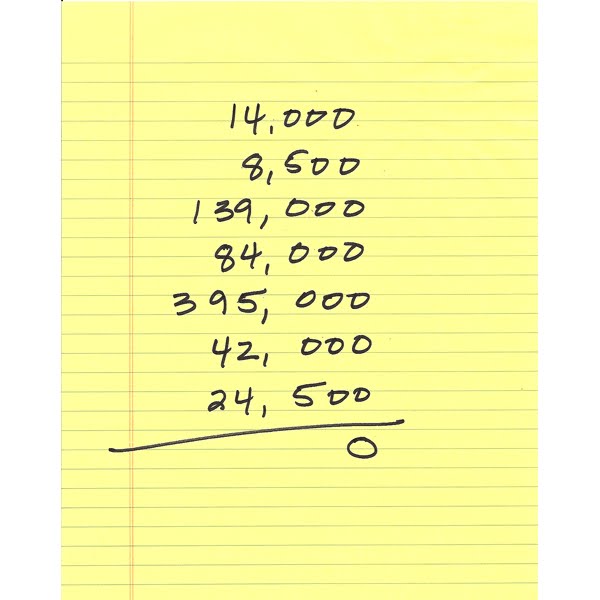
The twenty-three recovered comparison panels contain twenty-four works by LG Williams. Panel No. 16 presents two Williams works together: Letters From Old Girlfriends and its companion piece. The ledger below identifies the Williams works represented in the slideshow and connects them, where possible, to their records in the LG Williams Catalogue Raisonné.
Catalogue Raisonné links must be described accurately. An exact artwork record should be identified as an exact record; a broader or related series entry should be labeled as a related series record. Where no confirmed record has yet been identified, the ledger should say so directly rather than substitute an approximate link.
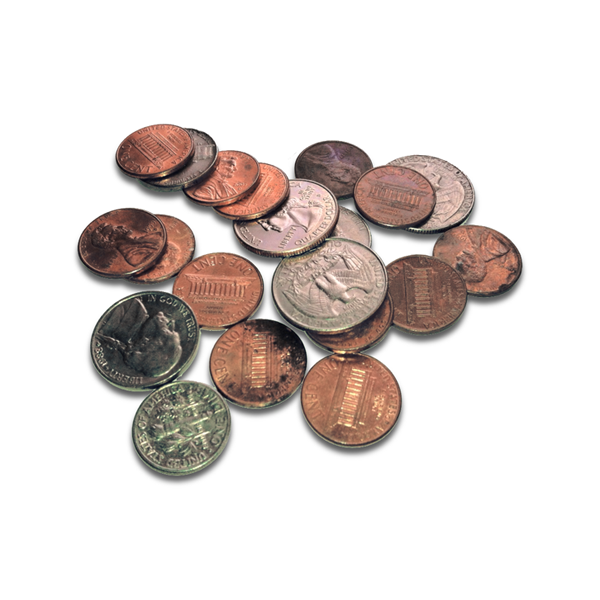
- 01Spare Change City – NashvilleLG Williams, 1997–2000, Dimensions Variable, Mixed media installationView Catalogue Raisonné image asset ↗︎
- 02Seating Arrangements (series selections)LG Williams, 2000, 30 × 40 in., Vinyl and engineer-grade reflective sheeting on heavy-duty aluminumView Catalogue Raisonné image asset ↗︎
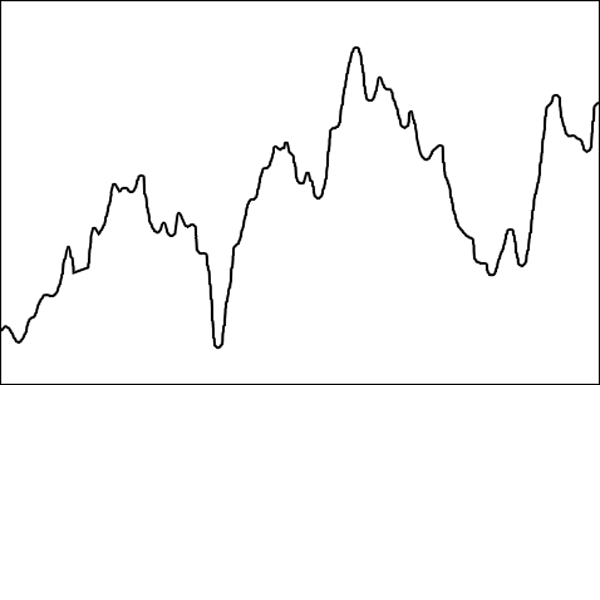
- 03Graph Landscape #22LG Williams, 2000, 50 × 80 in., Vinyl and engineer-grade reflective sheeting on heavy-duty aluminumView Catalogue Raisonné image asset ↗︎
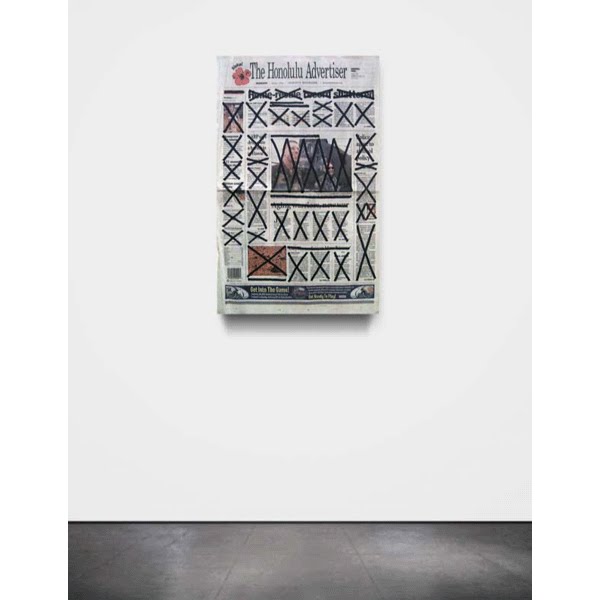
- 04Honolulu Bull #2LG Williams, 2004, 30 × 20 in., Drawing on newspaper mounted on canvasView Catalogue Raisonné image asset ↗︎
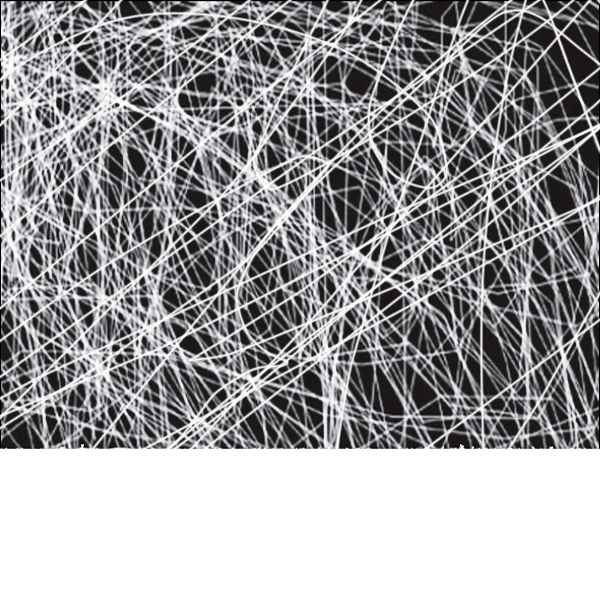
- 05The Fine Line #22LG Williams, 1999, 50 × 65 in., Mixed and digital media on canvasView Catalogue Raisonné image asset ↗︎
- 06The Hand You're Dealt #7LG Williams, 2002, 20 × 30 in., Playing cards mounted on canvasView Catalogue Raisonné image asset ↗︎
- 07Road Less Traveled #3LG Williams, 2004, 40 × 60 in., Vinyl and reflective sheeting on heavy-duty aluminumView Catalogue Raisonné image asset ↗︎
- 08Straw, Fluff and Eat PebblesLG Williams, 1994–1996, Various, Mixed media installationView related PCP Press publication ↗︎
- 09Zero ("00,000")LG Williams, 1999, 36 × 72 in., Vinyl and engineer-grade reflective sheeting on heavy-duty aluminumCatalogue Raisonné record not yet identified
- 10DOWLG Williams, 1999, —, Paintings, installation and artist bookView related PCP Press publication ↗︎
- 11Blend BendLG Williams, 1998, 36 × 60 in., Limited-edition OSE printView Catalogue Raisonné image asset ↗︎
- 12Amounts to Nothing #17LG Williams, 2000, 11 × 8½ in., Marker on yellow legal paperView related Catalogue Raisonné image asset ↗︎
- 13PrincessLG Williams, 1997, 72 × 18 in., WoodView Catalogue Raisonné image asset ↗︎
- 14Fliege Euer Unheimlich Gut FlugzeugLG Williams, 2002, 40 × 60 in., C-print and artist bookView related PCP Press publication ↗︎
- 15AngleLG Williams, 2000, 30 × 30 in., Vinyl and engineer-grade reflective sheeting on heavy-duty aluminumView archived webpage ↗︎
- 16Letters From Old GirlfriendsLG Williams, 2002, 20 × 20 in., Vinyl and Engineer Grade Reflective Sheeting on Heavy-Duty AluminumView Catalogue Raisonné record ↗︎
- 17Slice #2LG Williams, 1998, 30 × 30 in., Mixed media on canvasView archived webpage ↗︎
- 18Check – One CheckLG Williams, 2000, 48 × 36 in., Ink on paper mounted on canvasView archived webpage ↗︎
- 19The In-BetweenLG Williams, 2001, 9 × 12 in., Oil on canvasView archived webpage ↗︎
- 20ooooYaaaaLG Williams, 1996, Dimensions Variable, Mixed media installationView Catalogue Raisonné record ↗︎
- 21Zero (Amounts to Nothing series)LG Williams, 2000, Dimensions Variable, Medium not yet verifiedView Catalogue Raisonné record ↗︎
- 22HARDACHELG Williams, 1996, Dimensions Variable, Mixed media installationView related PCP Press publication ↗︎
- 23Red Triangle Green SquareLG Williams, 1995, 20 × 20 in., Vinyl and engineer-grade reflective sheeting on heavy-duty aluminumView Catalogue Raisonné record ↗︎




The Article as Mechanism
SEP 1, 2012The Huffington Post article functions here as part of the project's public mechanism, not merely as press coverage. The preserved two-page PDF carries the article title, Julia Friedman's byline, a publication timestamp, a French introduction, the embedded slideshow interface, its opening comparison, and — on the second page — homepage and promotion evidence.
Interface fragments preserved from the original presentation — header, author strip, publication/category strip, footer — are historically valuable for showing how the article was framed, categorized, and distributed in 2012. They are treated here as historical web assets, not as decoration.
Le Prix Marcel Duchamp 2005 devrait-il être réattribué à LG Williams?
Julia Friedman · Le Huffington Post France · September 1, 2012 · 2 pages · French
When the Evidence Became the Accused
OCT 12, 2012Jean-Noël Lafargue's response, published October 12, 2012, argues that Williams's image archive presented hundreds of images as earlier than Closky's works; that catalogues, CV entries, publications, galleries, websites, and Wikipedia activity were used to construct historical credibility; and that the timing of the dedicated domain was itself evidence. He states that Williams's Wikipedia entry was deleted and related accounts blocked, and contrasts Huffington Post's persistence with Wikipedia's mechanisms of correction. He also notes that one of his own photographs of "Manège" appeared in the article.
Lafargue counters that the episode should be understood as an elaborate construction of an artist, career, and evidentiary archive. The project's own position, stated above in § 01 and § 03, is not erased by this counter-document — both stand as competing archival interpretations.
- Williams's archive presents dated artworks, comparison panels, and historical web records as evidence that his work preceded the forms later associated with Closky.
- Jean-Noël Lafargue argued that the LG Williams identity and career were fabricated and that the comparison with Closky was a constructed hoax.
- Lafargue cited the project domain's recent registration and the deletion of the LG Williams Wikipedia article as evidence supporting his interpretation.
- Lafargue's response reproduced a photograph of Claude Closky's Manège exhibition credited to Jean-Noël Lafargue in the Wikimedia Commons record and objected to its use in the Huffington Post article.
L'affaire LG Williams: LG Williams N'Existe Pas!
Jean-Noël Lafargue · October 12, 2012
Dating Is the Dispute
2005–2019Timeline A — Project Record
- 2005Claude Closky awarded the 2005 Prix Marcel Duchamp.
- May 17 – Jul 31, 2006"Manège," Espace 315, Centre Pompidou, Paris.
- Sep 1, 2012Julia Friedman publishes the Huffington Post comparison.
- Sep 9 & 14, 2012Historical LG Williams project website posts.
- Jun 24, 2019Preserved project website archived as a snapshot.
Timeline B — Counter-Position
- Sep 24, 2012 Wikipedia opened an Articles for Deletion discussion concerning the LG Williams article.
- Oct 2, 2012 Wikipedia closed the first deletion discussion with the result "Delete."
- Oct 12, 2012 Jean-Noël Lafargue published a direct rebuttal to the Huffington Post comparison and the dedicated project website. He characterized Williams as a fabricated artistic identity, disputed the project chronology, cited the recent registration of its domain and the deletion of Williams's Wikipedia article, and objected to the use of his own Manège photograph.
- Oct 30, 2014 A second Wikipedia deletion nomination was closed after the nominator was blocked for impersonation; the nomination was identified as having been made in bad faith.
- Nov 2, 2014 Wikipedia's Article Rescue Squadron requested additional review of the LG Williams article.
- Dec 26, 2014 Wikipedia closed a third deletion discussion with the result "Delete."
Who Spoke, Who Amplified
RESPONSE STATUSPublished and continues to host the original 2012 article.
Characterized the matter as appropriation of whole artistic series, framed as evidence of French art-world insulation.
Published a detailed counter-interpretation, October 12, 2012.
Official prize/exhibition record only; no located response to the controversy.
No response to the controversy located; official 2005 award materials not yet located on current ADIAF channels.
No dated public statement, correspondence, or interview located.
Institutional context for the 2005 award setting only.
What an Archive Can Produce
INTERPRETATIONThe project's deepest question is not only whether one artist preceded another. It is what happens when an archive becomes convincing enough to produce the historical subject it appears merely to document.
The affair returns repeatedly to Duchampian questions of nomination, institutional validation, and the transformation of ordinary evidence into art-historical fact — asked here of an archive rather than a readymade.
Authorship and artistic precedent
Institutional recognition
The archive as evidentiary medium
Wikipedia and public historical authority
Continuing Legacy
No substantial later scholarly adjudication of the dispute has yet been located. The project therefore survives principally through its original publication, preserved website, comparison panels, Catalogue Raisonné records, contemporary rebuttal, Wikipedia history, and the institutional documents surrounding the prize. That absence of later resolution is itself significant: the project did not enter an established scholarly consensus but remains an unresolved work about precedence, visibility, artistic identity, and the power of archives to organize historical memory.
Complete Source Ledger
A–F- A
Julia Friedman, Huffington Post articleSep 1, 2012 · live + archive + PDF↗︎ - A
Historical project websiteleprixmarcelduchamp2005↗︎ - A
Original historical domain2005prixmarcelduchamp.com↗︎ - A
Jean-Noël Lafargue, counter-interpretationOct 12, 2012 · live + archive + PDF↗︎ - C
Telephonebooth Gallery responseEndorsement↗︎ - B
Centre Pompidou — French recordInstitutional↗︎ - B
Centre Pompidou — English recordInstitutional↗︎ - B
e-flux announcement2005 laureate announcement↗︎ - B
CNAP recordInstitutional↗︎ - B
Laurent Godin Gallery record"Manège," 2006↗︎ - D
Wikimedia Commons — "Manège" installation photographVerify license before use↗︎ - E
LG Williams PressBibliography↗︎ - E
LG Williams CVCareer record↗︎ - D
Catalogue Raisonné image, Cat. No. LGW-2012-08-01HuffingtonPost.fr comparison record↗︎ - D
Historical asset — Huffington Post headerhuffingtonpost_fr_header.gif↗︎ - D
Historical asset — Julia Friedman author striphuffingtonpost_face.png↗︎ - D
Historical asset — publication/category striphuffingtonpost-insert2.png↗︎ - D
Historical asset — Huffington Post footerhuffingtonpost_fr_btm.gif↗︎ - D
Contact Sheet 001Historical archive asset↗︎ - D
Contact Sheet 002Historical archive asset↗︎ - D
Contact Sheet 003Historical archive asset↗︎
How to Cite This Page
v1.5 · 2026-07-15LG Williams / The Estate of LG Williams, "Le Prix Marcel Duchamp 2005," 2012–2019, visual-comparison project, press intervention, and preserved website archive. Principal primary sources include Julia Friedman's 2012 Huffington Post article and slideshow, the historical project website, the LG Williams Catalogue Raisonné record, and contemporary responses by Telephonebooth Gallery and Jean-Noël Lafargue.
LG Williams / The Estate of LG Williams, "Prix Marcel Duchamp 2005: LG Williams, Claude Closky, and the Authority of the Archive," archival project overview and citation hub, version v1.5, published 2026-07-15, https://lgwilliams.com/prix-marcel-duchamp-2005/. Accessed [Month Day, Year].
Primary project documents
Huffington Post article and PDF; historical project website; original domain.
Institutional records
Centre Pompidou, e-flux, CNAP, Laurent Godin Gallery.
Contemporary responses
Telephonebooth Gallery; Jean-Noël Lafargue.
Related LG Williams records
Press, CV, Catalogue Raisonné, historical archive.
Later scholarship and interpretation
Pending — no later scholarly treatment yet located.
Technical / archive sources
Wayback Machine, ICANN lookup, Wikimedia Commons.